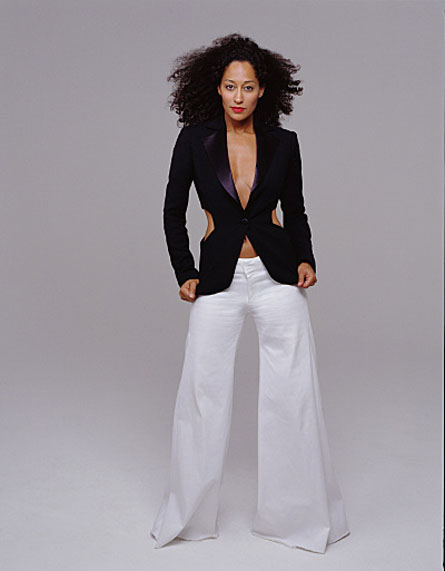
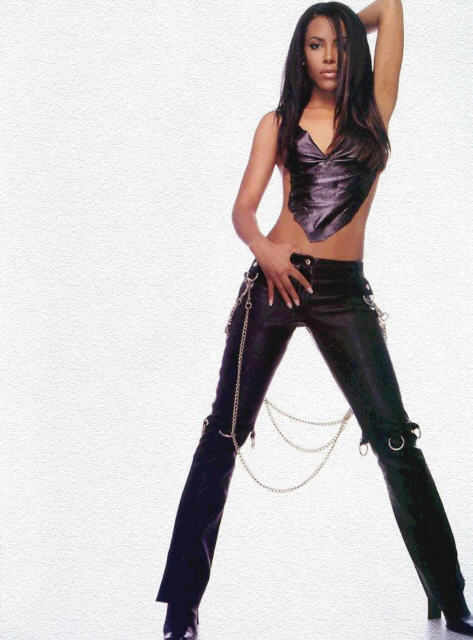
Tammi Terrell (April 29, 1945 – March 16, 1970) was a Grammy Award-nominated American soul singer, most notable for her association with Motown and her duets with Marvin Gaye.
Born Thomasina Winifred Montgomery in Philadelphia, she entered the music business at the age of 13, regularly performing live. In 1961, she was signed to the fledgling Scepter Records (later Wand Records), recording under the name "Tammy Montgomery".
After coming to the attention of James Brown, she recorded one single apiece for Brown's own Try Me record label and, in 1964, Checker Records. The year after that, she was spotted by Berry Gordy while playing live, and signed to his Motown label.
Initially Terrell recorded solo, with only moderate success (she had a pair of R&B Top 30 singles in 1966, "I Can't Believe You Love Me" and "Come on and See Me").
From 1967 onwards she recorded a series of duets with Marvin Gaye, producing hits with Ashford & Simpson written tunes such as "Ain't No Mountain High Enough", "Ain't Nothing Like the Real Thing" and "You're All I Need to Get By".
However, Terrell's success was to be short-lived. On October 14, 1967, while in concert at the homecoming for the Hampton Institute, Hampton, Virginia. she collapsed on stage (Ogden Hall) in Gaye's arms. She was rushed to the hospital, and she was later diagnosed with a malignant brain tumor. From then on her health deteriorated.
Gaye and Terrell's first duets album, United, contained two tracks which featured Gaye's vocals overdubbed onto previously recorded Terrell solo songs. The second, You're All I Need, relied upon the use of overdubs to complete the album, as Terrell had fallen ill; six of its 12 tracks were Terrell solo recordings overdubbed by Gaye to create duet tracks.
Gaye later told his biographer David Ritz that Terrell was no longer able to record and that Valerie Simpson recorded most of the female vocals on the final Gaye/Terrell duet album, Easy. (Simpson and her husband, Nickolas Ashford, are quoted as denying this in a book written by Terrell's sister Ludie Montgomery.)
Terrell died from a brain tumor at the age of 24. Marvin Gaye reacted to her death by taking a four year hiatus from concert performance and went into self-isolation. In addition, Gaye's classic album What's Going On, an introspective, low-key work which dealt with mature themes released in 1971, was in part a reaction to Terrell's death.
Award-winning journalist, author and school desegregation pioneer Charlayne Hunter-Gault was born on February 27, 1942 in Due West, South Carolina to Charles and Althea Hunter.
Because her father, a chaplain in the United States Army, was often re-assigned, Hunter-Gault and her siblings attended schools in California, Indiana, Ohio, Georgia and Alaska.
Hunter-Gault graduated third in her class from Atlanta's Henry McNeal Turner High School in 1960.
Backed by a group of black businessmen and accompanied by fellow student Hamilton Holmes, Hunter-Gault applied for admission to the segregated University of Georgia. Initially denied admittance, she enrolled at Wayne State University in Detroit, but Constance Baker Motley of the NAACP Legal Defense Fund and a group of Atlanta lawyers won her admittance to the University of Georgia in January of 1961. Hunter-Gault transcended the expected racial hostility, served a summer internship with the Louisville Times and graduated with a B.A. degree in journalism in 1963.
Charlayne in the University of Georgia yearbook (third row from top, second from left)
That same year, Hunter-Gault accepted a job as an editorial assistant with the New Yorker magazine. She won a Russell Sage Fellowship for a year and then served as a reporter and evening anchor for WRC-TV in Washington, D.C.
She returned to print journalism by accepting a post with the New York Times in 1968, establishing the newspaper's Harlem bureau. In 1978, Hunter-Gault joined PBS's McNeil-Lehrer Newshour where she served as national correspondent and filled in as an anchor. She joined NPR in 1997 as chief correspondent in Africa. In 1999, Hunter-Gault became the Johannesburg, South Africa bureau chief for CNN.
Hunter-Gault has received numerous awards for journalism including two National News and Documentary Emmy Awards and two George Foster Peabody Awards. She has been recognized by the National Urban Coalition and the American Women in Radio and Television.
Named Journalist of the Year by the National Association of Black Journalists, Hunter-Gault has written articles for Essence, Ms., Life and Saturday Review.
Her courage as a pioneer integrationist has been chronicled by Calvin Trillen and recognized by the University of Georgia, where a hall is named for her and fellow student Hamilton Holmes.
Her autobiography, In My Place, was published in 1992. Hunter-Gault's exploration of modern Africa, entitled New News out of Africa: Uncovering Africa's Renaissance, was published in 2006.
Hunter-Gault is the mother of a grown son and daughter and currently lives in South Africa with her husband, banker Ron Gault.
Dance luminary Carmen De Lavallade was born on March 6, 1931, to Creole parents in New Orleans, Louisiana. De Lavallade was raised in Los Angeles, California by her aunt, Adele, who has the distinction of owning, the Hugh Gordon Book Shop, one of the first African American history bookshops on Central Avenue.
Her cousin, Janet Collins, was the first African American prima ballerina at the Metropolitan Opera in New York City. De Lavallade discovered her talent for dance early. In 1945, she began studying ballet with Melissa Blake, and at the age of sixteen, upon graduation from Thomas Jefferson High School, she was awarded a scholarship to study dance with the renowned Lester Horton.
In 1949, De Lavallade became a member of the celebrated Lester Horton Dance Theater, where from 1950 to 1954, she enjoyed the status of lead dancer. During this time, De Lavallade continued to study dance and to become proficient in ballet and other forms of modern and ethnic dance. Lester Horton insisted that she study other art forms including painting, acting, music, set design and costuming. De Lavallade began studying ballet privately with Italian ballerina Carmelita Maracci and later acting with Stella Adler.
In 1954, De Lavallade made her Broadway debut in House of Flowers, and that same year, Alvin Ailey, the founder of the Alvin Ailey American Dance Center School, moved to New York City to partner with her in that production.
During that engagement in 1955, De Lavallade met and married dancer and actor Geoffrey Holder. With Holder, she completed her signature solo, Come Sunday, to which he suggested choreographing to a black spiritual, sung by Odetta Gordon.
In 1956, De Lavallade danced as the prima ballerina at the Metropolitan Opera performances of Samson and Delilah, and Aida. Also in 1956, she made her television debut in John Butler's ballet Flight, and in 1957, she appeared in the television production of Duke Ellington's A Drum is a Woman.
In pursuit of also an acting career, Lena Horne introduced her to the executives at Twentieth Century Fox, and between 1952 and 1955, she appeared in several films including Carmen Jones with Dorothy Dandridge. In 1959, she starred in Odds Against Tomorrow with Harry Belafonte. De Lavallade also appeared in several off-Broadway productions, including Othello and Death of a Salesman.
By the early 1960s, De Lavallade was a principal guest performer with Alvin Ailey's Dance Company and on the company's first European tour in 1962, the billing was De Lavallade-Ailey American Dance Company.
In 1964, she danced with Donald McKayle and in 1965 appeared in Agnes deMille's American Ballet Theater productions of The Four Marys and The Frail Quarry.
In 1970, De Lavallade joined the prestigious Yale School of Drama as a choreographer and performer-in-residence. She staged musicals, plays and operas, and later became a professor and member of the Yale Repertory Theater. Between 1990 and 1993, De Lavallade returned to the Metropolitan Opera as choreographer for Porgy and Bess and Die Meistersinger.
De Lavallade resides in New York City with her husband, Geoffrey Holder.
Find out more about Carmen and her husband in the film Carmen and Geoffrey which is available on dvd. I've seen it and it's really interesting.
I've lost the use of my heart But I'm still alive Still looking for the life The endless pool on the other side It's a wild wild west I'm doing my best
I'm at the borderline of my faith, I'm at the hinterland of my devotion In the frontline of this battle of mine But I'm still alive
I'm a soldier of love. Every day and night I'm soldier of love All the days of my life
I've been torn up inside (oh!) I've been left behind (oh!) So I ride I have the will to survive
In the wild wild west, Trying my hardest Doing my best To stay alive
I am love's soldier!
I wait for the sound (oooh oohhh)
I know that love will come (that love will come) Turn it all around
I'm a soldier of love (soldier of love) Every day and night I'm a soldier of love All the days of my life
I am lost But I don't doubt (oh!) So I ride I have the will to survive
In the wild wild west, Trying my hardest Doing my best To stay alive
I am love's soldier!
I wait for the sound
I know that love will come I know that love will come Turn it all around
I'm a soldier of love I'm a soldier
Still waiting for love to come Turn it all around (4x)
I'm a soldier of love I'm a soldier
Still waiting for love to come Turn it all around (3x)
Still waiting for love to come
Miss Keri Baby!
Tracee!
Solange!
The only interesting Knowles
un·for·get·ta·ble: Earning a permanent place in the memory; memorable: an unforgettable experience.


 Charlayne in the University of Georgia yearbook (third row from top, second from left)
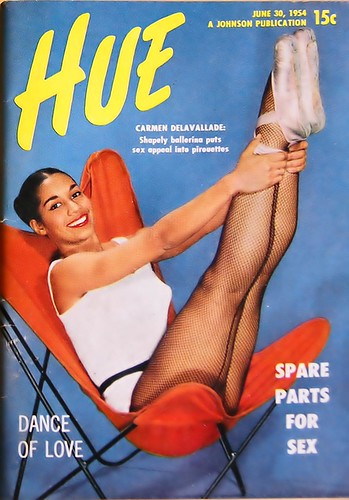
 In 1949, De Lavallade became a member of the celebrated Lester Horton Dance Theater, where from 1950 to 1954, she enjoyed the status of lead dancer. During this time, De Lavallade continued to study dance and to become proficient in ballet and other forms of modern and ethnic dance. Lester Horton insisted that she study other art forms including painting, acting, music, set design and costuming. De Lavallade began studying ballet privately with Italian ballerina Carmelita Maracci and later acting with Stella Adler.